
Celebrating Bermuda’s Botanical Heritage: The Lefroy Botanicals Stamp Issue
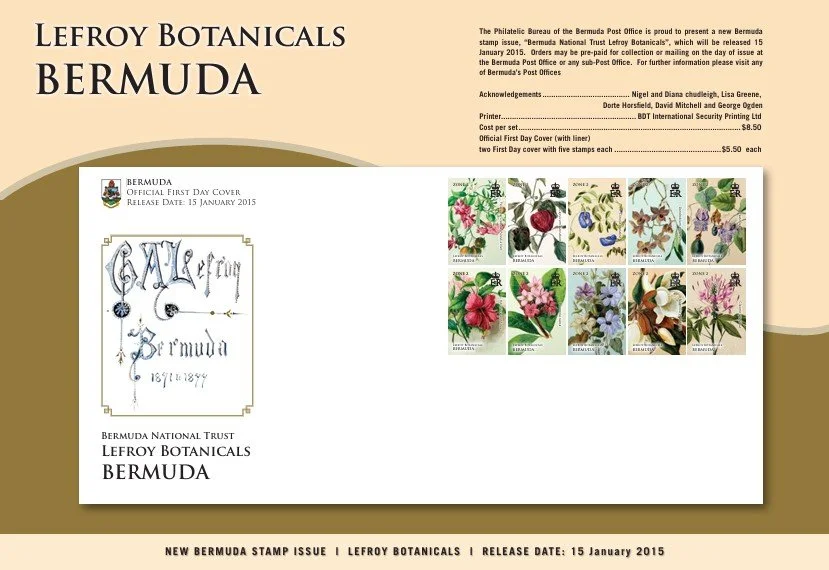
The resource document titled 5252_LeFroy-Botanical-Poster.pdf showcases a special Bermuda stamp issue known as the Lefroy Botanicals, released by the Bermuda Post Office in January 2015. This beautifully designed poster serves as both a visual guide and an educational piece, highlighting a curated selection of botanical illustrations that reflect Bermuda’s rich horticultural heritage.
This stamp series was created in partnership with the Bermuda National Trust and celebrates the long tradition of botanical study on the island. Each stamp presents a carefully rendered plant species, chosen for its cultural, aesthetic, or ecological significance. The result is a vibrant and collectible tribute to the plants that shape Bermuda’s landscape.
A Collaborative Tribute to Bermuda’s Plants
The poster highlights the collaborative nature of the project, acknowledging the individuals who contributed to the creation and research behind the series. The stamps were printed by an established security printing firm, and the collection was made available across Bermuda’s post offices as both single sets and official First Day Covers.
This partnership between artists, botanists, historians, and the Bermuda Post Office underscores the importance of botanical heritage as part of the island’s cultural identity.
A Closer Look at the Botanical Selection
The stamp series features a wide range of species, demonstrating the diversity of Bermuda’s botanical environment. Plants included in the collection are shown in vivid detail, each one labelled clearly, making the poster both visually appealing and informative. Among the plants featured are:
Hibiscus grandiflorus
Plumeria rubra
Clematis species
Magnolia grandiflora
Cleome speciosa
Pereskia aculeata and Pereskia bleo
Capsicum baccatum
Clitoria ternatea
Dendrobium moschatum
Passiflora edulis
Their inclusion reflects a mixture of native, naturalized, and culturally important cultivated plants, illustrating Bermuda’s blend of tropical and subtropical flora.
The Importance of the Lefroy Botanicals
This stamp issue is more than a collector’s item. It is a celebration of botanical history, a way to make scientific illustration accessible, and a reminder of the natural beauty that surrounds Bermuda. The Lefroy name carries historical significance in local botanical study, and this series ensures that connection remains alive for future generations.
Botanical illustrations have always played a vital role in scientific documentation. By placing them on stamps—a medium that travels across borders—Bermuda shares its environmental story with the world.
A Useful Resource for Education and Display
The poster serves as an excellent resource for:
Botanical or natural history exhibitions
School and community education
Garden clubs and horticultural societies
Museums
Visitor centers or café displays
Philatelic collections
Its neat layout and strong visuals make it suitable for both reference and display, whether used in a scientific context or purely as a celebration of Bermuda’s floral identity.
Preserving and Sharing Bermuda’s Floral Story
Overall, the Lefroy Botanicals poster is a striking tribute to the plants that help define Bermuda’s landscape. It blends art, science, and cultural history, offering a concise but meaningful glimpse into the island’s botanical world. For anyone interested in Bermuda’s natural heritage—whether a botanist, a collector, or a visitor—the document is a valuable and beautiful resource.
If you’d like, I can now help you refine this further for your website, create shorter versions, or write individual plant profiles based on the featured species.
