Mulberry Research by Berkeley Student Volunteers
Written by: Gabriele Young & Kionna Wade
Morus alba/rubra
Introduction
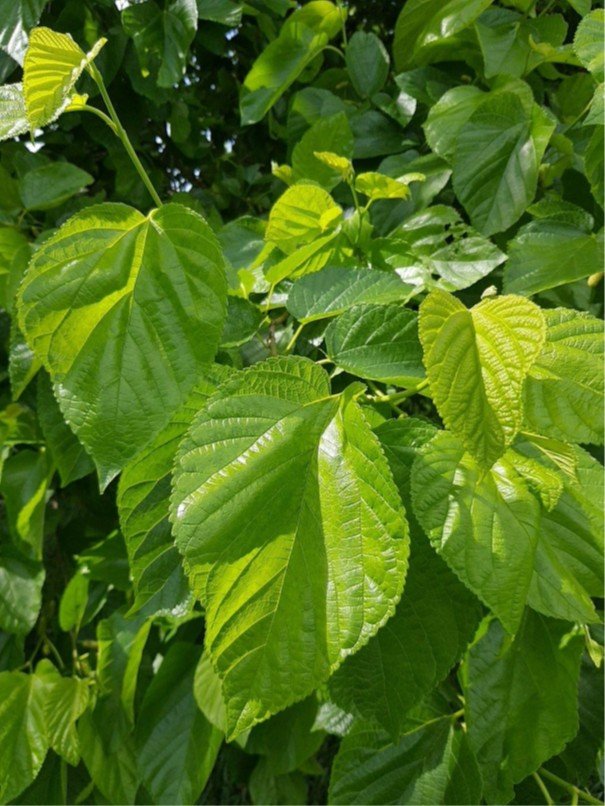
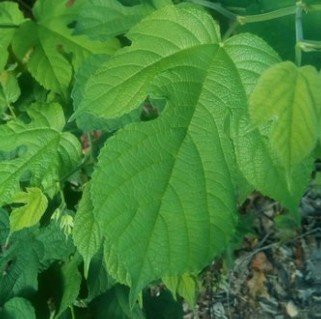
picture of plant from Botanical Garden
Morus alba, known by its common name white mulberry is native to northern China as well as Bermuda and introduced in North America. It is used in China to nourish silkworms. Even though it's called ‘white mulberry’, the name has nothing to do with the color of its fruits; the colors can range from white to red to purple. There are three common types of mulberry trees: white mulberry, red mulberry and black mulberry. Mulberry trees are similar in appearance and can be distinguished by their leaves, bark and fruit details.
In a 2015 article in the royal gazette, it was verified that mulberry trees are native to Bermuda. The
article states that in 2000, the newly retired Dr. David Wingate focused on unveiling whether
mulberry trees were grown in Bermuda and if the red mulberry was in fact a native, as mentioned
by early settlers. In 2013, Wingate teamed up with Dr. Kevin Burgess, an expert in mulberry trees
and DNA barcoding, traveled around the island collecting specimens, and sent them to Burgess’ lab
at Columbus State College. Results verified that red mulberries were indeed native to our Island as
well as white mulberries, and that they could hybridize to form red and white mulberry hybrids.
Mulberry trees have catkins( a long slim flower which often has no petals allowing the trees to
reproduce as the female flowers are pollinated by male flowers) Male catkins are yellowish-green
and measure ¾ – 2 inches long (2 – 5 cm). Female catkins are green with white ‘hairs’, shorter and
more oval. Compared to black and red mulberries, white mulberries are not as intense in flavor.
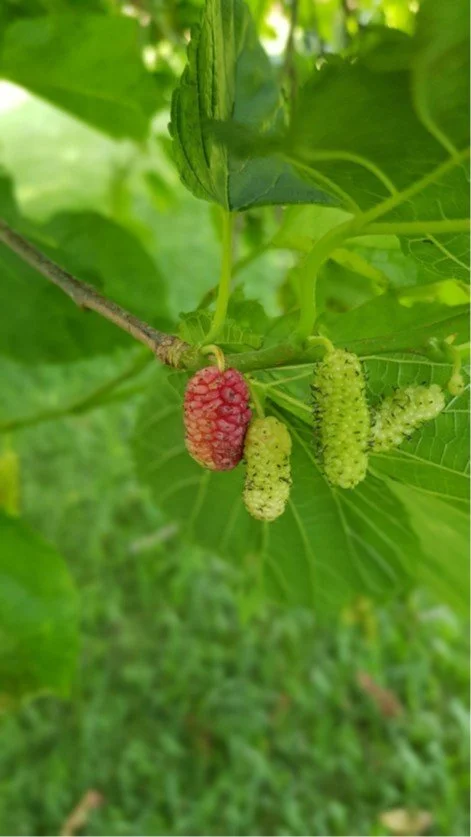
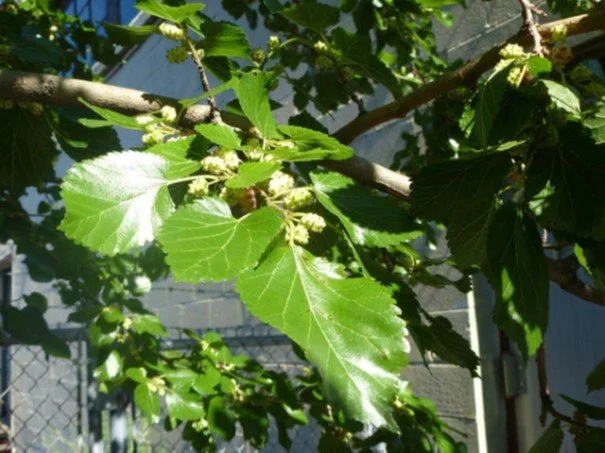
picture of plant from Botanical Garden
Red Mulberry vs. White Mulberry
Names:
Firstly, their scientific names are different. Red mulberry is named Morus rubra whereas white
mulberry is named Morus alba.
Native range:
White mulberry is native to Northern China and introduced in North America where it is considered
invasive. Red mulberry is native to eastern North America.
Leaves:
White mulberry has lustrous leaves, whereas red mulberry has leaves that are dull
Bark:
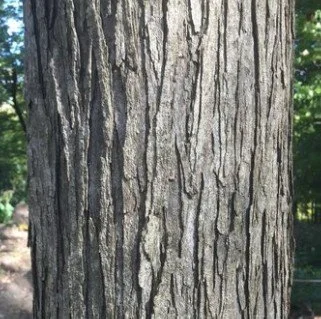
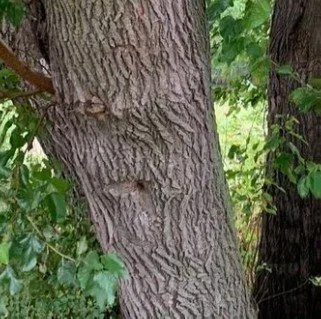
Red mulberry trees have gray-coloured barks with a scaly texture and straight ridges. White
mulberry trees have warm coloured barks, tan or brownish and have ridges that twist back and
forth.